
A name for companions
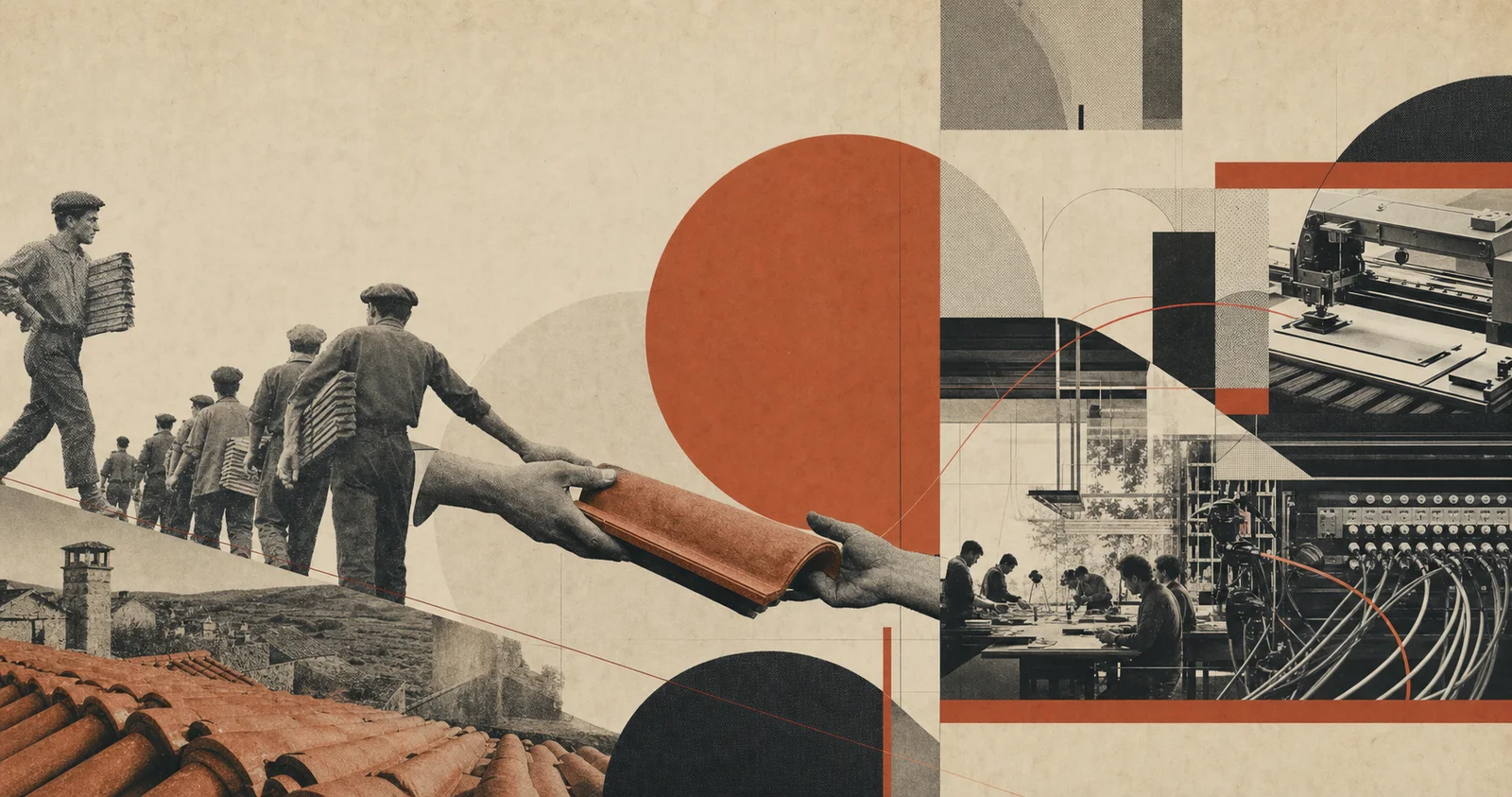
Daorde means companion in cabaqueiro, the jargon of Baixo Miño tile workers who migrated seasonally to Castile to earn their living. We chose it to speak through shared work, working-class memory and solidarity among equals.
Daorde is an independent publication of Marxist analysis about technology, current affairs, and class struggle. We publish to understand who designs infrastructure, who owns it, who works within it, and what alternatives can be built from below.
Companies and governments often present technology as neutral and inevitable. We study it as a material relation among capital, labor, energy, territory, administration and power, and debate how to transform it.
We publish articles, investigations, and essays about cybersecurity, surveillance, artificial intelligence, infrastructure, data, digital labor, free software, and technological conflict. We prioritize long-form reading, verifiable sources, public correction of errors, and an explicit anticapitalist position.
Criteria and method
Daorde’s main unit is the text: an investigation, essay, report, history, critique, interview or technical analysis. We choose bounded objects that reveal wider relations and set each article’s scale according to the available evidence. Data and code appear when they prove a claim that could not otherwise be sustained.
Every piece begins with a researchable question. Before commissioning it, we define the object, the evidence required, the access available and what result would force us to abandon the hypothesis. We prioritise primary sources — contracts, audited accounts, regulations, manuals, code, patents, archives, records and testimony from those doing the work — and distinguish documented facts, calculations, inferences and editorial positions.
Figures include their unit, date and source; estimates publish their assumptions and limits. Serious allegations require documents or independent corroboration, and affected organisations receive concrete questions and reasonable time to respond. Technical review checks the mechanism; factual review checks names, dates, figures, quotations and links.
We study ownership, control of infrastructure, the labour process, accumulation, imperialism and ecological limits. We reject calculation-free futurism, technocracy that conceals political decisions and quick opinion that substitutes for research. Conclusions come after evidence.
Collective accountability
Our work carries collective authorship because investigation and publication require documentation, writing, review, translation, design and production. Anonymity reduces exposure to harassment and repression, but not responsibility: we retain each investigation’s record, assign internal responsibility and answer for what we publish.
External contributors may sign by name, pseudonym or collectively according to agreement and safety. We credit translation, data work, photography and every substantial contribution; we do not hide other people’s work beneath Daorde’s signature.
We correct factual errors as soon as they are verified. When a change affects the meaning of a text, we explain what changed, when and why. We do not withdraw a documented conclusion because it causes discomfort, but we review any new evidence capable of refuting it. Corrections can be sent to daorde@proton.me with the passage and a verifiable source.
Daorde accepts no advertising, sponsored content, paid links or money in exchange for coverage. We will disclose material conflicts and the general source of income that could affect a piece. Our communist position raises the burden of proof: useful truth must name causes, owners, institutions and points of intervention.
Technology, AI and access
Technology is not only code: it is social organisation, division of labour and class struggle. It can reduce necessary labour and free time, but under capital those possibilities remain subordinate to profitability and command. We study the concrete mechanism and the forces capable of transforming it.
We may use automated systems to search documents, compare versions, transcribe, translate, clean data, check calculations, program tests or produce editorial illustration. Their output never counts as a source. Every factual claim must return to a verifiable document, datum or testimony, and a responsible person reviews the result.
We do not use synthetic images as documentation of an event or fabricate voices, scenes or quotations. When an illustration could be mistaken for evidence, we identify it. Daorde retains full responsibility for what it publishes.
We publish in Galician, Spanish and English with the same structure and verification. All content is open access under the CC BY-NC-SA 4.0 licence to support access, cultural autonomy and the circulation of knowledge.